
Bure Standtall Walker
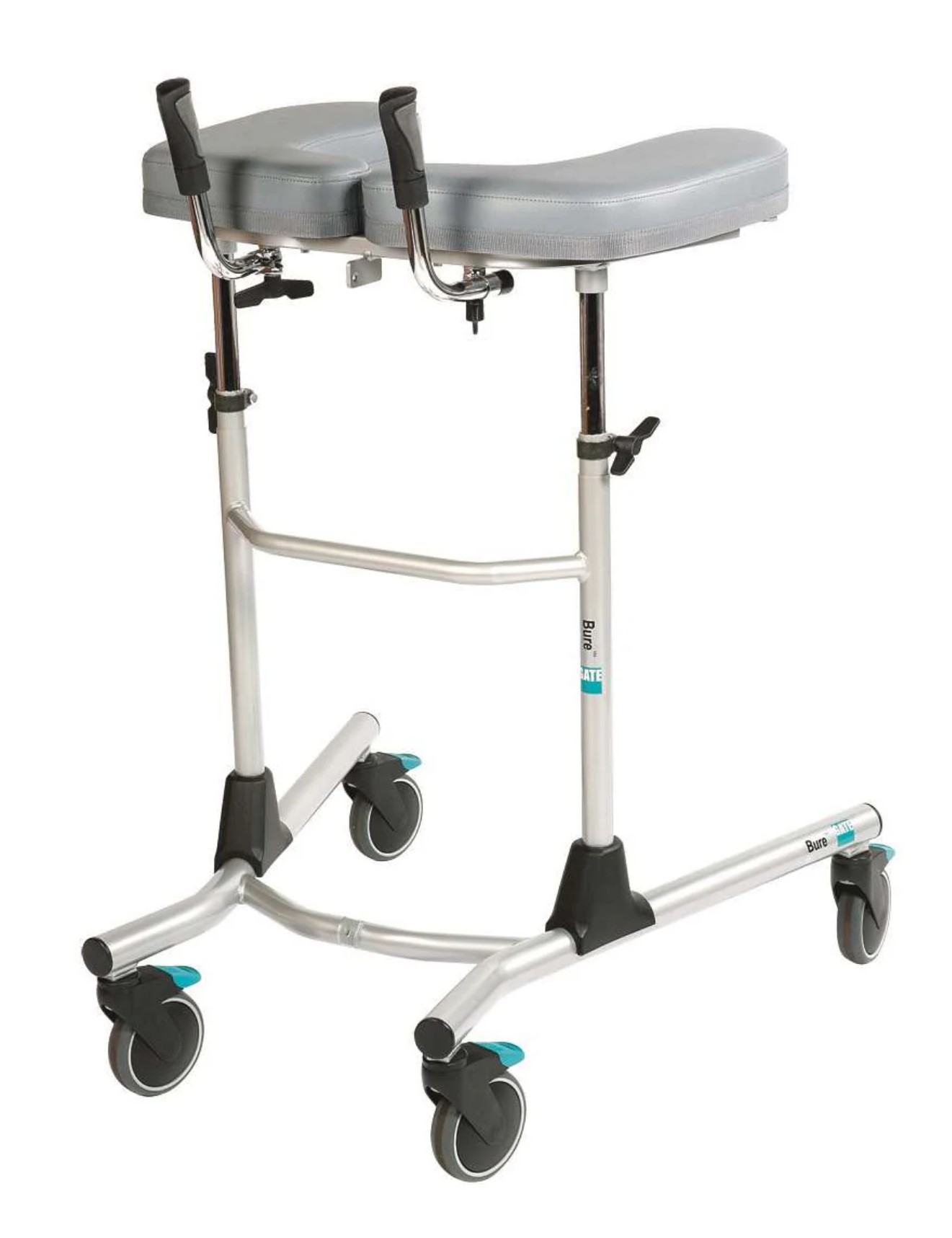
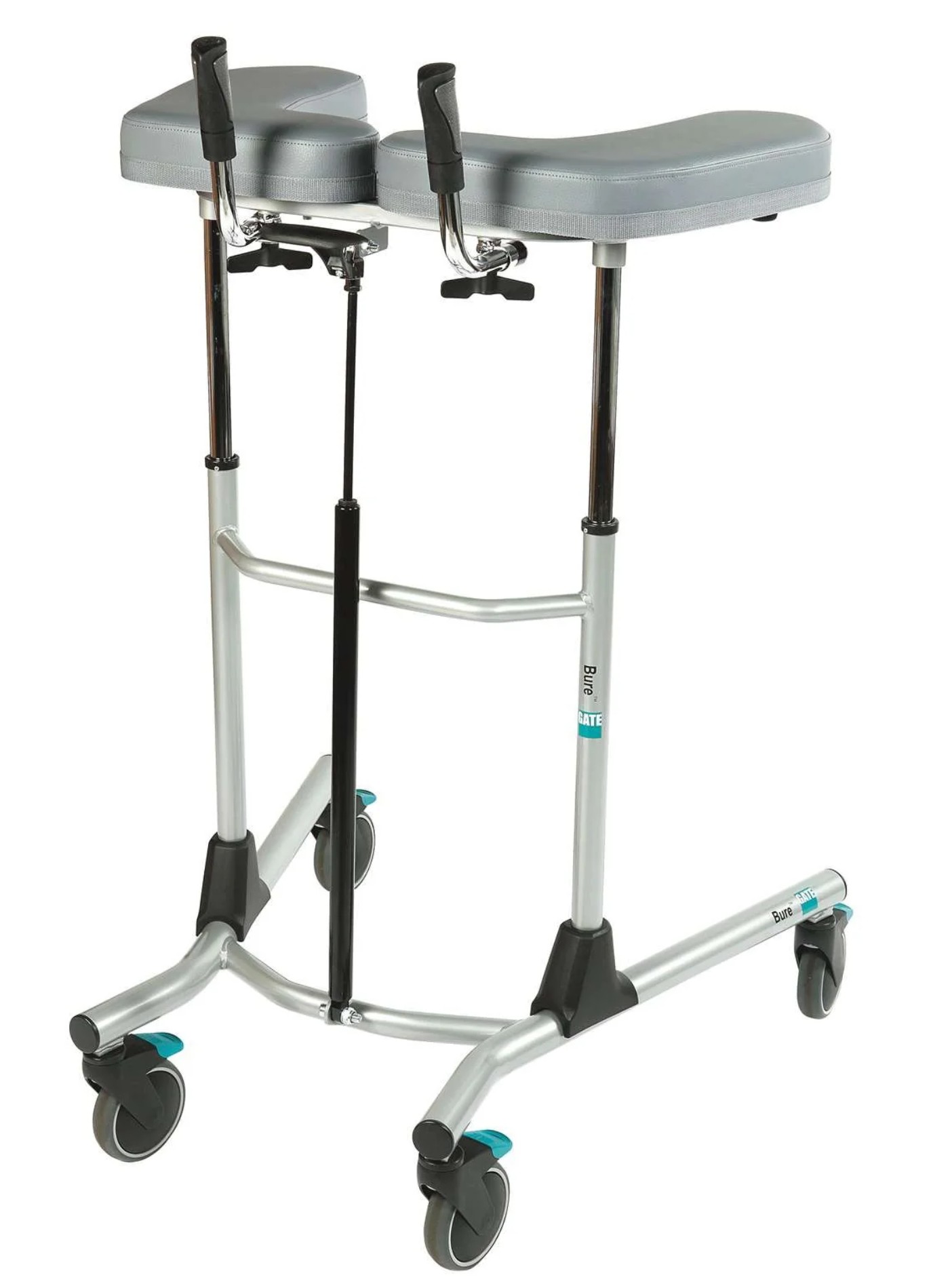
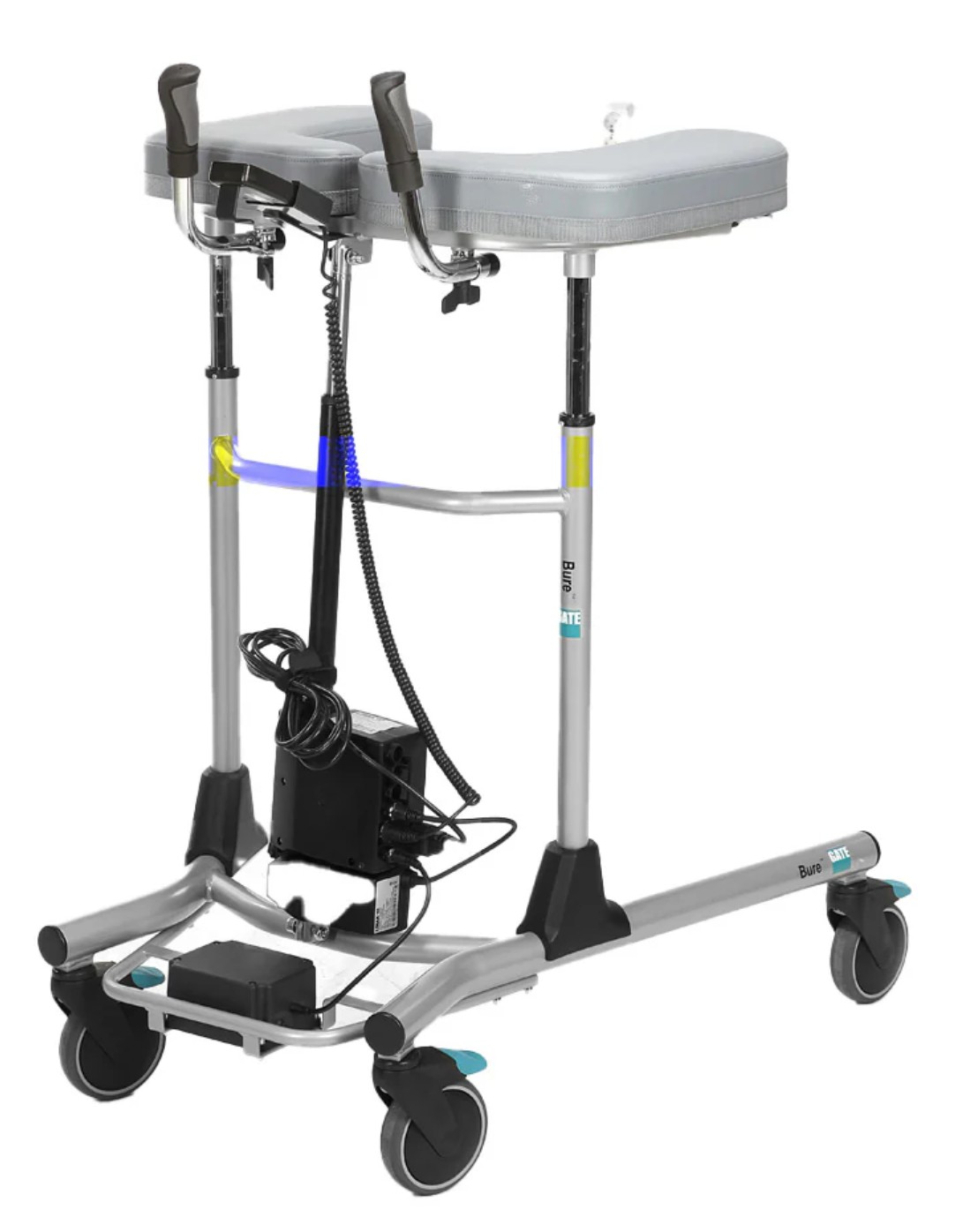
The Bure Standtall Walker provides forearm and torso support for upright ambulation — available in manual, gas-cylinder, and electric versions. Designed for users who require upper-body loading support to maintain an upright walking posture.
Specifications
| Max. User Weight | 352 lbs (160 kg) |
|---|---|
| Drive / Adjustment Type | Manual / Gas-cylinder / Electric |
| Frame Material | Lightweight aluminum frame |
| Model / SKU | Bure-Standtall |
Key Features
- Forearm and torso support platform
- Encourages upright walking posture
- 352 lbs (160 kg) maximum user weight
- Height-adjustable frame
- Rollator wheels with brakes
- Foldable for transport and storage
- Padded forearm supports
- Chest support panel
- Available in the Americas through TR Group, Inc.
Overview
The Bure Standtall Walker is designed for users who need upper body support to walk upright — whether due to reduced trunk stability, neurological conditions affecting posture, or generalized weakness that causes forward lean during ambulation.
The forearm and torso support platform allows the user to load weight through their forearms and chest rather than their wrists alone — enabling a more upright posture than a standard rollator and reducing fatigue in users with limited hand and wrist strength.
Three Versions
The Bure Standtall is available in three versions to match user ability and clinical setting:
| Version | Height Adjustment | Best For |
|---|---|---|
| Manual | Hand-operated mechanical | Users with adequate upper body strength to adjust independently |
| Gas-cylinder | Spring-assisted gas strut | Easier adjustment with less effort — intermediate option |
| Electric | Powered at the push of a button | Users with limited hand or arm strength; clinical environments |
All three versions share the same forearm and torso support platform, capacity, and frame geometry — the difference is how the height is adjusted.
Clinical Applications
The Standtall is appropriate for:
- Post-stroke rehabilitation where trunk stability is affected
- Parkinson’s disease — supports upright posture and reduces freezing risk
- Cerebral palsy and other neurological conditions affecting ambulation
- Elderly users with significant stooped posture and forward lean
Comparison with Rise & Go
| Rise & Go DB | Standtall | |
|---|---|---|
| Powered standing assist | Yes | No |
| Walking frame support | Yes | Yes |
| Trunk/torso support | No | Yes |
| Forearm loading | No | Yes |
| Capacity | 330 lbs / 150 kg | 352 lbs / 160 kg |
| Primary use | Sitting-to-standing + walking | Supported upright ambulation |
Frequently Asked Questions
Is the Bure Standtall appropriate for Parkinson’s disease? Yes. The upright posture supported by the Standtall’s forearm and torso support is particularly beneficial for Parkinson’s patients who tend toward a stooped, shuffling gait. The frame provides a stable reference point that encourages a more upright walking pattern and may reduce freezing episodes. Suitability should be confirmed with the patient’s physiotherapist or neurologist.
What is the difference between the Standtall and a standard forearm rollator? A standard forearm rollator supports the user at forearm level only. The Standtall adds a chest/torso support panel — meaning the user can rest more of their body weight through their trunk, not just their arms. This is the key clinical distinction for patients with weak hands, wrists, or upper limbs who cannot adequately grip or load a standard rollator.
Does the Standtall fold for transport? Yes — the Standtall is foldable for transport and storage. Confirm specific fold dimensions with your authorized dealer for vehicle or closet storage planning.
Contact us to find an authorized dealer near you.